
The word “lame” is common in everyday English, texting, social media, and casual conversations. When people search for lame meaning slang, they usually want to understand what someone means when they call an idea, joke, person, event, or situation “lame.” In slang, the word often describes something that feels boring, disappointing, uncool, weak, or unimpressive.
For example, if someone says, “That party was lame,” they probably mean the party was boring or did not meet their expectations. Similarly, “That excuse is lame” can suggest that the excuse sounds weak or unconvincing.
The meaning can change slightly depending on the situation and the relationship between the people using it. Sometimes it is a serious criticism, while friends may use it playfully. Understanding the tone, context, and surrounding words is therefore important before deciding exactly what someone means.
Meaning & Definition
In slang and casual English, “lame” generally means boring, uncool, disappointing, weak, or not interesting. It is often used when someone or something fails to create excitement or does not live up to expectations.
For example:
- “That movie was lame.”
→ The movie was boring or disappointing. - “Your joke is lame.”
→ The joke was not funny or impressive. - “He gave me a lame excuse.”
→ His excuse seemed weak or unconvincing. - “That’s so lame!”
→ That is disappointing, annoying, boring, or uncool.
The word is informal, so it appears more frequently in conversations, texts, comments, and social media than in formal writing.
The exact meaning depends heavily on context. Calling a movie “lame” is usually a comment about its quality. Calling a person’s behavior “lame” can be more critical and may sound insulting. Among close friends, however, it can sometimes be used jokingly.
The expression can also describe an event that was less enjoyable than expected. If someone says, “The concert was lame,” they may mean the performance lacked energy or entertainment.
In modern slang, “lame” is usually negative, but it does not always represent a serious insult. Tone matters. A laughing emoji, playful wording, or friendly conversation can make the expression sound much lighter.
Therefore, the simplest explanation is:
Lame = boring, disappointing, uncool, weak, or unimpressive, depending on the context.
Background and Evolution of “Lame”
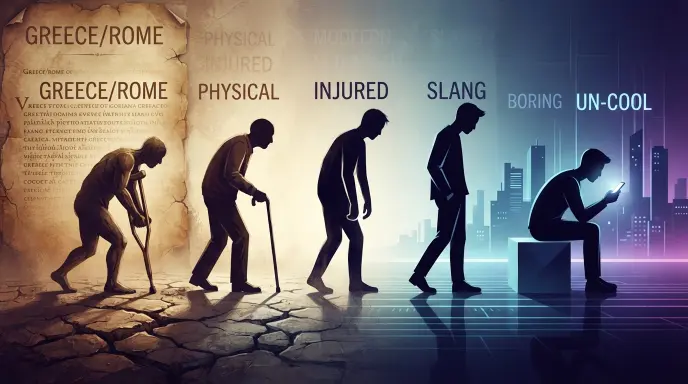
The word “lame” has a much older history than its modern slang use. Traditionally, it was associated with physical difficulty or disability, particularly difficulty walking. Over time, English speakers began using the word metaphorically to describe something that was weak, ineffective, or inadequate.
Its casual meaning gradually became associated with things that were considered boring, disappointing, or uncool. This shift is common in language because words often develop new meanings when people use them creatively in everyday speech.
Today, the slang sense is much more common in informal communication. Teenagers, young adults, online communities, and social media users may use “lame” to react quickly to something they dislike.
For instance, a person might comment “Lame” under a boring announcement or tell a friend, “Come on, that’s lame,” when a plan gets canceled.
The word became especially useful in casual conversations because it is short and expressive. Instead of explaining that something is disappointing, boring, or poorly planned, someone can simply say, “That’s lame.”
However, its meaning has not completely replaced its traditional meanings. Depending on the context, “lame” can still appear in discussions unrelated to modern slang. This is why readers should look at the sentence around the word instead of assuming every use has the same meaning.
Language also changes across generations. Younger users may use “lame” casually or humorously, while older speakers may use it differently or understand it primarily through its traditional meanings.
In online communication, the slang version is generally understood as a criticism of something considered uncool, boring, weak, or disappointing.
Usage in Different Contexts
The meaning of “lame” can change depending on where and how it is used. In casual conversation, it usually expresses disappointment or criticism.
In Everyday Conversation
Someone might say:
“That restaurant was lame.”
This means they did not enjoy the restaurant or thought it was disappointing.
Another example is:
“Don’t be lame. Come with us!”
Here, the speaker may be teasing someone for refusing to join a plan.
In Social Media
On social platforms, “lame” can appear in comments, captions, replies, or direct messages. A user might comment “That’s lame” when they disagree with an unpopular decision or find a post boring.
In Professional Settings
The word is generally informal and should be used carefully at work. Saying “That presentation was lame” to a colleague could sound disrespectful.
In a professional environment, alternatives such as “unconvincing,” “ineffective,” “unclear,” or “disappointing” are usually more appropriate.
When Describing a Person
Calling someone “lame” can be more personal. It may mean the person is boring, uncool, annoying, or behaving in an unimpressive way.
For example:
“He’s being lame today.”
This may not mean the person is always boring. It could simply criticize their current behavior.
When Used as a Joke
Friends may also use the word playfully:
“You forgot my birthday? Lame!”
The speaker might be genuinely disappointed, or they could simply be teasing.
Therefore, context and tone are essential when interpreting the word.
Lame Meaning in Chat, WhatsApp, Instagram, and TikTok
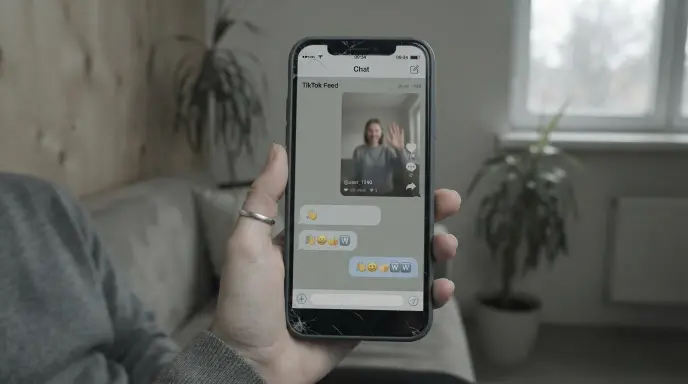
In chats and messaging apps such as WhatsApp, “lame” is usually used as a quick reaction. Someone might send only:
“Lame 🙄”
This can mean “That’s boring,” “That’s disappointing,” or “That’s not cool.”
If someone says:
“Why are you being so lame?”
they may be criticizing the other person’s behavior, especially if that person refuses to participate in something fun.
On Instagram, “lame” may appear in comments or direct messages. For example, someone could respond to a disappointing situation with:
“That’s lame.”
On TikTok, the word may be used in comments about a trend, joke, video, challenge, or opinion that a viewer does not enjoy.
The meaning can also become playful when combined with emojis. For example:
“You really canceled on me? 😂 Lame.”
This could be more teasing than aggressive.
Another important point is that texting removes many clues available in face-to-face conversations. You cannot hear the speaker’s voice or see their facial expression. As a result, “lame” may sometimes appear harsher in a message than the sender intended.
If the message contains laughing emojis, playful punctuation, or friendly wording, it may be lighthearted. If it appears alongside an argument or insulting language, it is more likely to be a genuine criticism.
So in most online conversations:
Lame = boring, disappointing, weak, uncool, or not impressive.
Meaning in Physics, Medical, and Aircraft Terminology
The slang meaning of “lame” should not be confused with technical or historical uses of the word.
Physics
“Lame” may appear in technical terminology associated with Lamé, particularly in mathematical physics and elasticity theory. Lamé’s name is associated with concepts such as Lamé parameters and Lamé equations.
This is different from the slang word “lame.” The capitalization and surrounding technical language usually make the distinction clear.
Medical Context
Historically, “lame” has been used to describe difficulty walking or impaired movement. In modern medical writing, however, healthcare professionals generally prefer specific clinical terminology rather than using “lame” as a diagnosis.
For example, a medical professional might describe gait abnormalities, weakness, injury, or mobility limitations more precisely.
Aircraft Terminology
“Lame” is not normally a standard general aviation term meaning “boring” or “uncool.” If you encounter a similar-looking term in aircraft documentation, it may be an acronym, abbreviation, surname, or specialized technical expression.
This distinction is important because a word can have completely different meanings in technical fields.
When interpreting “lame,” always examine the surrounding information. A TikTok comment saying “That’s lame” has nothing to do with physics, medicine, or aircraft engineering.
Common Misconceptions About “Lame”

One common misconception is that “lame” always means stupid. Although it can express disapproval, its meaning is broader. It can mean boring, disappointing, weak, uncool, or unimpressive.
Another misconception is that calling something “lame” always represents serious anger. Not necessarily. Friends frequently use it as playful teasing.
For example:
“You won’t watch the new episode with us? Lame!”
The speaker could simply be joking.
People also sometimes assume that “lame” has exactly the same meaning in every situation. Context changes its strength.
Compare:
“That movie was lame.”
with:
“You’re lame.”
The first criticizes an experience or piece of entertainment. The second directly targets a person and can sound much more insulting.
Another misunderstanding involves the difference between slang and formal English. “Lame” is understandable in everyday English, but it is not always the best choice in professional or academic writing.
Finally, some people assume that every use of the word refers to its slang meaning. Technical, historical, or name-related uses can be completely unrelated.
The safest approach is to consider three things:
- Who said it?
- What were they talking about?
- Was the tone serious or playful?
These clues usually reveal the intended meaning.
Similar Terms and Alternatives
Several words can communicate a similar idea to “lame,” but each has a slightly different tone.
Boring
“Boring” directly means something fails to hold your interest.
Example:
“That lecture was boring.”
Uncool
“Uncool” is close to the slang meaning of “lame” and often suggests that something is socially unattractive or unfashionable.
Example:
“That was an uncool thing to do.”
Weak
“Weak” can describe an excuse, argument, joke, or effort that is not convincing or impressive.
Example:
“That’s a weak excuse.”
Disappointing
“Disappointing” is more neutral and appropriate in many situations.
Example:
“The ending was disappointing.”
Cringe
“Cringe” describes something embarrassing, awkward, or uncomfortable to watch.
Example:
“That video was so cringe.”
Dull
“Dull” usually means lacking excitement or interest and sounds more formal than “lame.”
The best alternative depends on what you actually mean. If something is simply boring, say “boring.” If it is embarrassing, “cringe” may fit better. If an argument is unconvincing, “weak” may be more accurate.
How to Respond When Someone Says “Lame”
Your response should depend on the person’s tone and what they are criticizing.
If they are joking, you can respond playfully:
“Haha, you think so?”
or:
“You’re just jealous.”
If they are genuinely criticizing something, you can ask:
“What didn’t you like about it?”
This invites a clearer explanation instead of turning the conversation into an argument.
If someone calls your idea lame, you can stay confident:
“Maybe it’s not your thing, but I like it.”
If you think they misunderstood you, explain your point:
“I was actually joking.”
When the comment is clearly insulting, you do not have to argue. A calm response such as “That’s okay, you don’t have to like it” can end the situation without unnecessary drama.
In dating conversations, the response can be more playful:
“Lame? Give me a chance to impress you.”
The key is not to overreact. A single word such as “lame” can mean anything from friendly teasing to genuine criticism depending on the situation.
Differences Between “Lame” and Similar Words
Although “lame,” “boring,” “cringe,” “bad,” and “uncool” can overlap, they are not identical.
| Word | Common Meaning | Typical Tone |
|---|---|---|
| Lame | Boring, disappointing, weak, or uncool | Informal |
| Boring | Not interesting or entertaining | Neutral |
| Cringe | Embarrassing or awkward | Informal |
| Bad | Low quality or undesirable | General |
| Uncool | Socially unattractive or not acceptable | Informal |
| Weak | Unconvincing or unimpressive | Casual/Formal |
| Dull | Lacking excitement or interest | More formal |
For example, a boring movie may be “dull,” while an awkward social media video may be “cringe.” A weak excuse may be called “lame,” but “weak excuse” can be more precise.
The word “lame” is especially flexible because it can criticize many different things. That flexibility is one reason it remains common in casual communication.
Relevance in Online Conversations and Dating Apps
On dating apps, “lame” can have several meanings depending on the conversation.
Suppose someone sends a very predictable opening line and receives:
“Lame 😂”
They may be saying that the opening line was boring or unoriginal. The laughing emoji can make the response playful rather than genuinely hostile.
Someone might also say:
“That pickup line was lame, but I’ll give you points for trying.”
This combines criticism with humor and may actually keep the conversation open.
In another situation, however, “lame” could signal genuine disinterest. If someone repeatedly gives short negative responses such as “lame,” “boring,” or “whatever,” they may not be interested in continuing the conversation.
The best way to understand the message is to look at the entire exchange rather than focusing on one word.
Online communication also allows “lame” to function as a reaction. A person may use it to criticize a trend, joke, dating profile, conversation topic, or plan.
Because dating apps are informal environments, slang is common. Still, calling someone personally “lame” can sound rude, especially when there is little established rapport.
If you receive this word from a match, don’t automatically assume the conversation is over. Check whether they are teasing, responding to something specific, or clearly expressing disinterest.
Conclusion
The slang word “lame” is commonly used to describe something that is boring, disappointing, weak, uncool, or unimpressive. Its exact meaning depends on the situation, the speaker’s tone, and the relationship between the people involved.
In WhatsApp chats, Instagram comments, TikTok discussions, and casual conversations, “lame” is often a quick way to express dissatisfaction. It can criticize a joke, movie, plan, excuse, behavior, or conversation. Among friends, it may also be used playfully without serious intention.
The word is different from terms such as “boring,” “cringe,” “weak,” and “uncool,” although their meanings sometimes overlap. In professional and technical settings, context becomes even more important because “lame” can have historical or specialized meanings unrelated to modern slang.
If someone calls something “lame,” the simplest interpretation is usually that they found it boring, disappointing, weak, or not cool. When in doubt, consider the surrounding conversation and tone before reacting.
