
Few slang words have started as many family arguments as “boomer”. A teenager mutters it at a parent’s tech question, a meme page stamps it on an out-of-touch opinion, and suddenly everyone is debating generations. But what does “boomer” actually mean in slang?
Originally, a boomer is a member of the Baby Boomer generation — people born in the boom of births after the Second World War, roughly between 1946 and 1964. In modern slang, though, the word has drifted far from the calendar: it now labels anyone who seems old-fashioned, out of touch, or resistant to new ways.
That drift is what makes the word powerful and, at times, unfair. A thirty-year-old with an old-school opinion can be called a boomer, while an actual seventy-year-old who streams and codes sails through life unlabelled. In slang, boomer is more a mindset than an age.
In this article, you will learn what boomer means in slang, where the word comes from, how “OK boomer” conquered the internet, the word’s surprising other lives in submarines and Australia, similar generation terms, and how to respond when someone points the word at you.
1. Meaning and Definition of Boomer
What does boomer mean in simple words?
In simple words, a boomer is an older person — or, in slang use, anyone acting like one. The strict meaning points to the Baby Boomer generation, born roughly 1946 to 1964, who grew up in the prosperous post-war decades. The loose meaning points to attitudes: confusion with technology, nostalgia for “how things were,” and confidence that the young are doing life wrong.
Boomer as a playful insult
Online, boomer works as a teasing label. Calling someone a boomer for printing out an email, refusing to stream music, or typing in all caps is usually meant as a joke about habits, not a genuine attack on their worth. Between friends and family it is often affectionate — the roast you give a beloved uncle.
When it stops being playful
The word can also be used dismissively, as a way to end arguments without engaging: your opinion is old, therefore wrong. In that form, boomer becomes a stereotype, and many older people reasonably dislike it. As with most slang, tone and relationship decide whether it lands as banter or as disrespect.
2. Background and Origin of Boomer
The baby boom generation
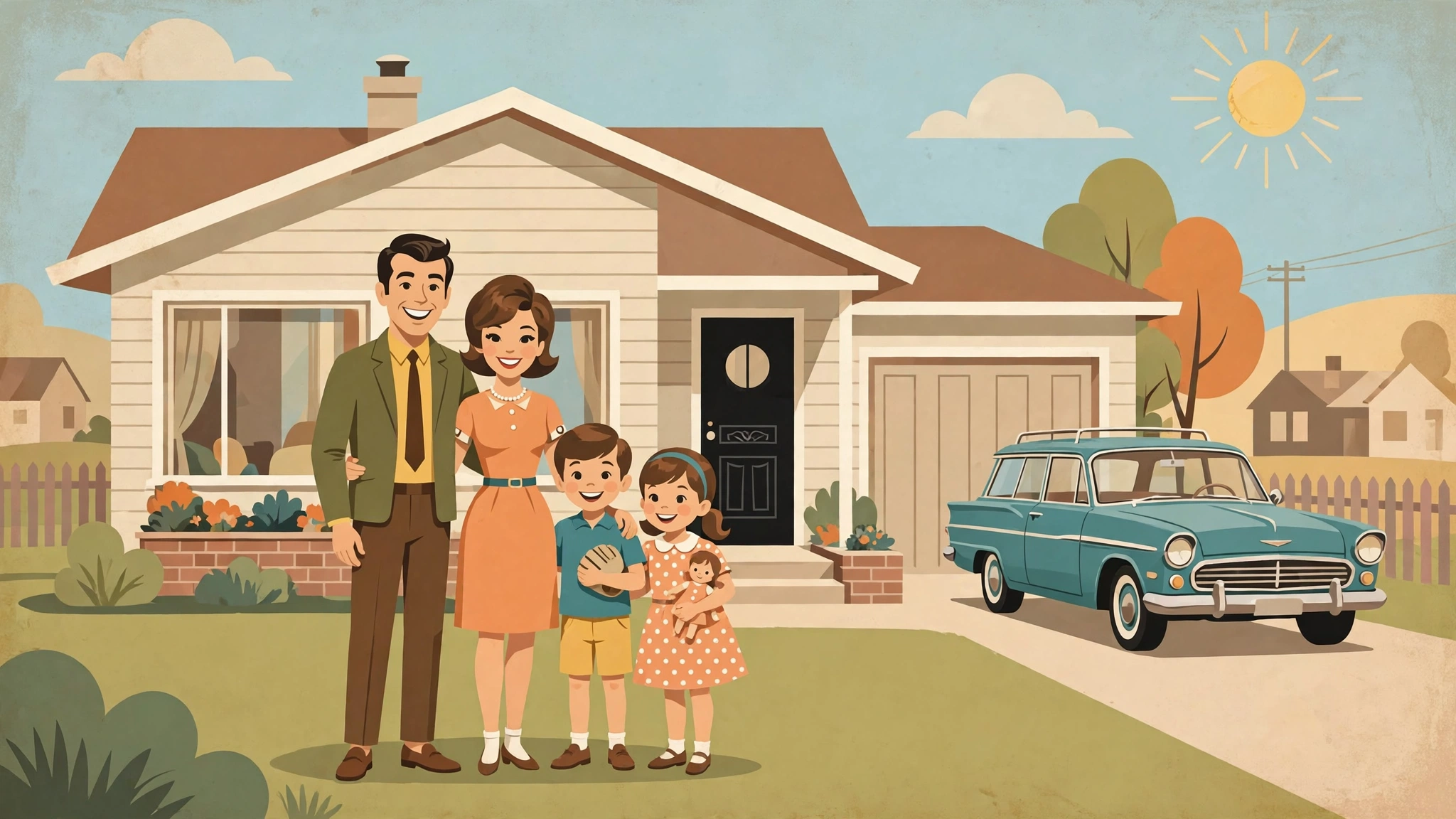
After the Second World War ended in 1945, soldiers returned home, families grew quickly, and birth rates soared across America, Europe, and Australia. Demographers named the surge the “baby boom,” and its children the Baby Boomers. The generation went on to dominate culture, politics, and the workplace for decades.
How a neutral label became slang
For most of its life, “boomer” was a plain demographic word. The slang twist arrived with social media, where younger users — squeezed by housing prices, student debt, and a changing job market — began using it as shorthand for an older generation they felt had enjoyed easier economics and now lectured them about it.
“OK boomer” goes viral
The explosion came in 2019 with “OK boomer,” a flat, dismissive reply to condescending comments from older people. It spread from TikTok into songs, merchandise, and even a New Zealand parliament speech, when a young lawmaker calmly answered an interruption with the phrase. From then on, boomer was no longer just a generation — it was an internet attitude.
3. Usage of Boomer in Different Contexts
Teasing technology struggles
The classic boomer moment involves technology: taking a photo of a screen instead of a screenshot, asking why the Wi-Fi “box” is blinking, or ending every text with an ellipsis… Family chats worldwide run on this gentle comedy, and the label usually carries love with it.
Criticising out-of-touch opinions
In discussions about rent, careers, or climate, boomer appears when advice feels decades out of date — “just walk in and hand them your CV.” Used this way, the word is an argument in miniature: it accuses the speaker of not understanding how the world works now.
“Boomer energy” and self-aware jokes
Plenty of people label themselves: “my boomer moment” when they prefer phone calls, print a boarding pass, or defend an ancient playlist. This self-roasting version drains the word of cruelty and turns it into a shared joke about everyone’s inner old soul.
In politics and the media
News media adopted the slang quickly, because boomer perfectly names a real tension: younger voters facing expensive housing and insecure work, older voters holding most property and political power. Editorials debate “boomer policies,” and politicians court or criticise “the boomer vote.” In these serious settings the word returns to its demographic roots, but the slang flavour never fully washes off.
4. What Does Boomer Mean on WhatsApp, Instagram, and TikTok?
Boomer on WhatsApp
On WhatsApp, boomer lives in the family group — the natural habitat of forwarded chain messages, good-morning images, and typing in capital letters. Younger relatives joke about “boomer parents,” and in most families it is said with a grin. WhatsApp habits, like sending a full stop at the end of every message, are lovingly catalogued as boomer classics.
Boomer on Instagram
Instagram hosts a library of boomer memes: minion jokes, comic-sans wisdom, and blurry forwarded photos. Pages dedicated to “boomer humour” collect the style affectionately, and older users themselves share the memes — proof the word often describes an aesthetic more than an enemy.
Boomer on TikTok
TikTok is where boomer became a generational flag. Young creators perform skits of boomer parents, rank boomer opinions, and answer older critics with a deadpan “ok boomer.” The platform turned a demographic word into a running cultural conversation about who understands modern life.
5. Does Boomer Have a Meaning in Physics, Medicine, or Aircraft Terminology?
In the navy: boomers are submarines
Boomer does have a real military meaning. In the United States Navy, ballistic missile submarines — the huge nuclear-armed SSBNs that hide under the oceans — are nicknamed “boomers.” Sailors use the word professionally and proudly, so in a naval context a boomer is a submarine, not a grandfather.
In Australia: boomer is a kangaroo
Australian English gives the word another honest job: a large male kangaroo is called a boomer. The old Christmas song “Six White Boomers” — about Santa’s kangaroos — keeps this meaning famous. A boomer can also describe anything impressively large in older Australian slang.
In physics and medicine
To be plain: boomer has no standard meaning in physics, and it is not a medical term either. Doctors may describe the “boomer generation” when discussing ageing populations, but that is the demographic word again. Its genuine technical homes are the navy and Australian wildlife — everywhere else, it is slang or demographics.
6. Common Misconceptions About Boomer
“Every older person is a boomer”
Not even close by the calendar: many of today’s grandparents are Generation X, and the youngest true boomers are around sixty. And by the slang meaning, age alone does not qualify anyone — plenty of older people are more online than their grandchildren.
“Boomer is always a hateful word”
Context rescues it constantly. Between generations who tease each other lovingly, boomer is closer to a nickname than a slur. It only turns harsh when it is used to shut down someone’s voice purely because of their age.
“OK boomer ended the conversation forever”
The meme faded from its 2019 peak, as memes do, but the word it supercharged is permanent. Boomer is now a standard piece of English slang, understood from schoolyards to parliaments.
7. Similar Terms and Alternatives to Boomer
The generation vocabulary
Boomer sits inside a whole family of generation labels, each with its own slang flavour. Learning them together makes online generational humour much easier to follow.
| Term | Full form or meaning | Typical use |
|---|---|---|
| Boomer | Baby Boomer (born ~1946–1964); slang for out-of-touch attitudes | Teasing old-fashioned opinions or tech habits |
| Zoomer | Generation Z member | The boomer’s online opposite number |
| Millennial | Generation Y (born ~1981–1996) | Often caught between boomers and zoomers |
| OK boomer | Dismissive reply phrase from 2019 | Ending an argument with an out-of-touch comment |
| Boomer energy | Displaying classic boomer habits at any age | Self-aware jokes about one’s own old-school moments |
Kinder alternatives
When you want the joke without the edge, “old school” does the same work with far less sting — it praises experience while noting the vintage. And when no joke is needed, describing the habit (“Dad prefers printing his tickets”) beats labelling the person.
Some families have even turned the exchange into a ritual, trading “boomer” and “zoomer” titles like holiday gifts. The slang works best exactly there: as a shared vocabulary that lets generations tease each other into conversation instead of silence.
8. How to Respond When Someone Texts You Boomer
Take it as the joke it usually is
Most of the time, the winning reply is to lean in: “Proud boomer since before your Wi-Fi was born.” Humour disarms the label instantly and shows the one thing boomers are accused of lacking — the ability to laugh at themselves.
If your kids or friends say it constantly
A light clap-back keeps the game balanced: “Careful, zoomer, I pay for the internet you mock me on.” Family boomer exchanges are a sport; play them warmly and nobody loses.
If it was used to dismiss you unfairly
When boomer is thrown to silence a real point, you can answer calmly: “My age isn’t an argument — let’s talk about the idea.” Asking for the discussion to return to substance is the most un-boomer move of all.
9. Boomer vs Similar Words: Key Differences
Boomer vs Baby Boomer
Baby Boomer is the formal demographic term, used by statisticians and historians. Boomer alone is the slang descendant — shorter, punchier, and carrying the jokes and judgments the formal term never had.
Boomer vs Zoomer
Zoomer is Gen Z’s nickname, built by swapping the B of boomer for a Z. The two words form a pair in internet humour: boomers accuse zoomers of fragility; zoomers accuse boomers of being out of touch; both accuse each other of ruining everything.
Boomer vs Millennial
Millennials (born roughly 1981–1996) sit between the two, and confusingly get called boomers by the young and “kids” by the old. In slang accuracy, millennial is a real separate generation — but in meme law, anyone older than the speaker risks the boomer label.
10. Relevance of Boomer in Online Conversations and Dating Apps
Boomer as generational shorthand
Online, boomer compresses whole debates — about money, technology, work, and respect — into six letters. It lets young users name a frustration instantly, and lets older users perform their experience as either pride or parody. Few slang words carry so much sociology in so little space.
The word also travels across languages. Borrowed into social media worldwide, “boomer” is understood from Tokyo to Berlin as the universal symbol of the out-of-touch elder — proof that every culture recognises the character, even where the original baby boom had a different name and different dates.
Boomer on dating apps
Dating apps give the word a flirtatious edge. Profiles joke “boomer at heart” to advertise early nights, printed recipes, and a love of phone calls over texts; matches use it to tease age gaps and old-school tastes. Read kindly, a “boomer at heart” badge usually means the person values calm, direct, offline things — for many daters, a genuinely attractive quality.
11. Conclusion
Boomer began as a respectful name for the post-war Baby Boom generation and grew, through memes and “OK boomer,” into slang for any out-of-touch, old-fashioned attitude — regardless of the age of the person wearing it. It also quietly serves as the nickname of nuclear submarines and big Australian kangaroos, which may be the most boomer fact of all: the word has lived several lives.
Used with warmth, it is one of the internet’s favourite family jokes. Used to dismiss, it says more about the speaker than the target. Now you know the difference — deploy it kindly.
