
You send a friend the notes from yesterday’s class, and two seconds later your phone lights up with a reply: “ty”. Two letters, no emoji, no punctuation. Are they grateful? Annoyed? In a hurry? If you have ever paused over that tiny message, you are not alone — TY is one of the most common abbreviations in texting, and also one of the easiest to misread.
TY simply means “thank you.” It is the fastest way to show gratitude in a chat, the digital equivalent of a quick smile and a nod. People use it dozens of times a day: after a favor, a compliment, a ride, a file, a piece of news — anywhere a full “thank you” would appear in speech, TY can appear in a text.
But like every short abbreviation, TY carries tone as well as meaning. Sent after a big favor, it can feel warm and genuine. Sent alone after you poured your heart into helping someone, it can feel a little cold. The letters never change — the context does all the work.
In this article, you will learn exactly what TY means in text, where it comes from, how it is used on WhatsApp, Instagram, and TikTok, how it compares with TYT, TYSM, and NP, and the best ways to reply when someone sends it to you.
1. Meaning and Definition of TY
The main meaning: “thank you”
TY is an abbreviation of “thank you,” built from the first letters of the two words: T for “thank” and Y for “you.” It belongs to the oldest family of texting shortcuts, the ones created when messages were typed on number keypads and every character cost time or money. Two letters did the job of eight, and the habit never died.
In practice, TY works as a complete sentence. “ty” on its own means “thank you,” full stop. It needs no subject, no verb, and no object, because the situation supplies all three: you know what you did, and both of you know why they are grateful. “Sent you the file” — “ty.” “Happy birthday!!” — “ty!!” The exchange is finished in a heartbeat.
TY as quick, casual gratitude
The key word with TY is casual. It is the thank-you of everyday life: fast, friendly, and low-ceremony. Friends, siblings, classmates, teammates, and gaming partners use it constantly. It signals “I appreciate that” without turning the moment into a formal event. Reaching for the full “thank you so much, I really appreciate it” for every small favor would feel as strange as bowing to your brother for passing the salt.
That casualness is also its limit. TY scales down gratitude to match small favors, and using it for enormous ones — someone drove across town at midnight to help you — can look lazy or ungrateful. Skilled texters match the size of the thanks to the size of the favor, and TY sits near the small end of that scale, which is exactly why it gets used the most.
Variations: ty, TY, tyty, and ty with emojis
TY appears in several flavors. Lowercase “ty” is the neutral default. Capital “TY” can read as emphasis — either genuinely enthusiastic or, in the wrong chat, slightly shouty. Doubling it into “tyty” adds warmth and playfulness, a form popular in gaming and fan communities. Adding an emoji or punctuation — “ty!”, “ty 🙏”, “tyyy” — stretches the gratitude a little further, the way lengthening a spoken “thank yooou” does.
You will also meet TY inside longer strings: “ty for the ride,” “ty again,” “ok ty.” In each case it keeps the same job: compressing gratitude into two letters so the conversation can keep moving.
2. Background and Origin of TY
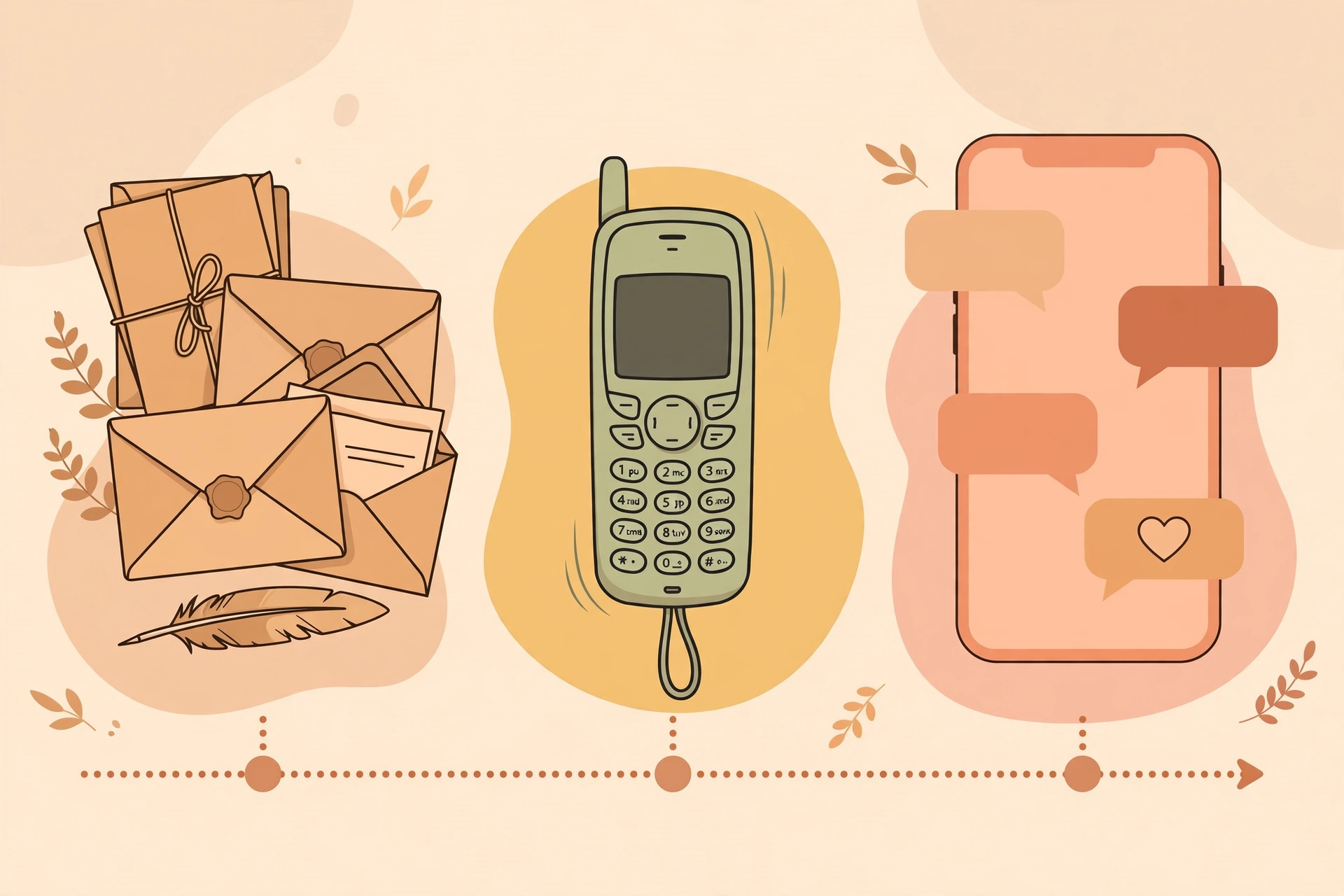
Gratitude shortcuts before smartphones
People were shortening “thank you” long before texting existed. Telegrams, where every word cost money, pushed writers toward abbreviations. Note-takers and stenographers used “ty” in shorthand. Even earlier, letter writers closed notes with compressed signatures and thanks. The human instinct to say “thanks, quickly” is old; TY is simply its digital form.
The SMS era made TY standard
TY became universal in the late 1990s and early 2000s, when text messages were limited to 160 characters and typed on keypads where each letter might need three button presses. Chat rooms, instant messengers like AIM and MSN, and early online games rewarded the fastest typists. In that world, “thank you” was eight keystrokes of luxury; TY was two. Alongside LOL, BRB, and OMG, TY entered the permanent vocabulary of digital English.
Why TY survived the smartphone age
Full keyboards and unlimited messages should have killed abbreviations like TY — instead they became identity. Typing TY today is not about saving effort; it is about signaling register. It says “we are casual here, we are comfortable, no ceremony needed.” Slang that marks closeness tends to survive, and TY, used billions of times between friends, is as much a badge of informality as a shortcut.
TY also crossed languages. In multilingual chats — including across South Asia, the Middle East, and Latin America — TY is understood instantly even where English is a second or third language, because two letters travel better than a full phrase.
3. Usage of TY in Different Contexts
TY between friends and family
Among friends and family, TY is the default thank-you for the hundred small transactions of daily life: “picked up your package” — “ty”; “mom said dinner’s at 7” — “ty.” Nobody tracks whether it was “warm enough,” because the relationship supplies the warmth. In close chats, TY is less a measurement of gratitude than a receipt: message received, favor registered, all good.
TY in gaming and online communities
Gamers made TY part of the standard etiquette kit. “ty” flies after a heal, a revive, a trade, a carry, or a “gl” at the start of a match. In fast games there is no time for more, and the community reads TY as proper manners — the player who never says it stands out as rude. Fan communities on Discord and Reddit use TY the same way, often as “tyty,” when someone shares a link, a translation, or a rare screenshot.
TY at work and in semi-formal chats
TY does appear at work, but carefully. Between teammates who chat all day, “ty!” after a quick file or answer is normal and friendly. In an email to a client, a manager, or anyone senior, though, TY is too compressed — it can read as careless. The professional rule of thumb: TY is fine in instant messages to people you know well, and risky everywhere else. When in doubt, the full “thank you” costs you two seconds and buys you safety.
TY as a conversation closer
Finally, TY often works as a polite full stop. “Ok ty” frequently means “thanks — and that’s everything, chat complete.” It closes the loop without the awkwardness of a formal goodbye. Recognizing this saves you from over-replying: after a closing TY, a 👍 reaction or nothing at all is a perfectly good answer.
4. What Does TY Mean on WhatsApp, Instagram, and TikTok?
TY on WhatsApp
On WhatsApp, TY is the everyday thank-you of family groups, friend chats, and neighborhood groups alike. It usually appears right after someone shares something useful — a document, a location, a contact, a photo from an event. In group chats, TY also does a second job: it acknowledges the message so the sender is not left hanging, while keeping the group free of long thank-you speeches. A “ty 🙏” in a family group is the standard, universally understood move.
TY on Instagram
On Instagram, TY lives in DMs and comment sections. Under a post, “ty” replies to compliments: “you look great in this!” — “ty 🥺.” Creators use it when followers share their posts or tag them in stories, and friends drop it when someone sends them a reel or a meme that lands perfectly. Because Instagram is visual and fast, TY there often comes dressed with emojis to carry the warmth that the two letters alone cannot.
TY on TikTok
On TikTok, TY appears in comments thanking creators for tutorials, story-times, recipes, and recommendations: “ty for this, I finally get it.” It also shows up in livestream chats, where viewers thank hosts for shout-outs and gifts. TikTok’s comment culture is rapid-fire, so TY’s brevity is an advantage — and creators often pin or heart the grateful comments, which teaches everyone else to keep saying it.
TY on dating apps
On dating apps, TY is mostly a response to compliments: “you have a great smile” — “ty.” Here tone matters more than anywhere. A bare “ty” can read as pleased, shy, or completely uninterested, depending on what follows. If the TY is followed by a question or a compliment back, the conversation is alive. If every message from someone is just “ty” and “lol,” they are probably being polite, not interested — TY is closing the exchange, not opening one.

5. Does TY Have a Meaning in Physics, Medicine, or Aircraft Terminology?
The honest answer first
As “thank you” slang, TY has no technical meaning at all. It is purely a chat abbreviation. No physics textbook, medical manual, or aviation document uses TY to mean thank you, and nobody in a cockpit or a laboratory is expressing gratitude with it. If you meet the letters T and Y in a technical setting, they are doing entirely different jobs that have nothing to do with texting.
Where the letters TY actually appear in technical fields
To be precise: in physics and chemistry, “Y” is the chemical symbol for the element yttrium, and “T” can stand for temperature or the tesla — but “TY” as a pair is not a standard unit or symbol. In aviation, TY is an IATA-style code fragment that appears inside airport and airline designators (for example, it is part of the code for Toyama Airport in Japan, TYO being the city code for Tokyo) — these are location codes, not slang. In medicine, “TY” is not a recognized abbreviation for any condition or treatment.
Why this section exists
Slang guides sometimes invent impressive-sounding technical meanings for chat abbreviations. With TY, the truthful answer is simple: it means thank you in chats, and outside chats the two letters are just codes and symbols that coincidentally sit side by side. Meaning comes from context, and TY’s context is the chat window.
6. Common Misconceptions About TY
“TY is rude or lazy”
The most common misconception is that TY is disrespectful — that people who use it “cannot be bothered” to say thank you properly. Among friends, this is simply wrong: TY is the agreed local currency of thanks, and nobody feels shortchanged. Rudeness appears only when the thanks is wildly out of proportion to the favor, or in formal settings where the abbreviation itself breaks the expected register. The letters are not rude; the mismatch is.
“TY always means the person is annoyed”
A lone “ty.” with a period can look icy, and internet folklore claims TY is passive-aggressive. In reality, most bare TYs mean nothing more than a quick thanks from a busy person. Tone clues live in the whole chat: if everything else is warm, the TY is warm too. Do not prosecute a two-letter message on the evidence of its own brevity.
“TY stands for something else”
Some guess TY means “there you go,” “take yours,” or the name “Ty” (short for Tyler or Tyrone). Capitalized “Ty” can indeed be a name — context will make that obvious (“Ty said he’ll come”). As a standalone reply to a favor, though, TY is thank you, every time. There is no hidden second meaning to decode.
7. Similar Terms and Alternatives to TY
The gratitude abbreviation family
TY has a whole family of relatives, each calibrated to a different size of thanks. TYSM (“thank you so much”) is the bigger, warmer upgrade. TYT (“take your time”) looks similar but means something completely different — a classic trap. NP (“no problem”) and YW (“you’re welcome”) are the standard replies to TY, not alternatives to it. And “thx” or “thanx” is the older sibling, popular in gaming since the 1990s.
| Term | Full form or meaning | Typical use |
|---|---|---|
| TY | Thank you | Quick thanks for small favors between friends |
| TYSM | Thank you so much | Bigger, warmer thanks for real help |
| THX | Thanks | Older casual thanks, common in gaming |
| TYT | Take your time | Telling someone not to rush (not a thank-you) |
| NP | No problem | The standard reply when someone thanks you |
| TYL | Talk to you later / thank you, Lord (rare) | Mostly a sign-off; context decides |
Choosing the right size of thanks
Think of gratitude abbreviations as denominations of money. TY is the small coin — perfect for daily transactions. TYSM is the larger note for favors that cost someone real effort. And a full sentence — “thank you, you saved my day” — is the handwritten check you reserve for moments that genuinely matter. Mixing them up is the only real error: paying a big debt with TY feels cheap, and paying for a coffee with a paragraph feels strange.
8. How to Respond When Someone Texts You TY
The classic replies: NP, YW, and “anytime”
When someone sends you TY, the standard replies are “np” (no problem), “yw” (you’re welcome), “anytime,” or “ofc” (of course). All of them complete the ritual: favor done, thanks given, thanks accepted. A reaction emoji on their message — ❤️ or 👍 — also works and keeps the chat clean.
Warm replies for close friends
With close friends you can add a little flavor: “always,” “got you,” “that’s what I’m here for,” or a joking “you owe me one 😌.” These replies accept the thanks while strengthening the bond — they say the favor was not a burden but a pleasure. Match their energy: a playful “tyty 🥺” deserves more than a flat “np.”
When no reply is needed
If TY arrives as a conversation closer — “ok ty, see you tomorrow” — the exchange is already complete. Replying with another message restarts a chat the other person just politely ended. A reaction, or simply leaving it, is the socially fluent move. Not every message needs an answer; TY is very often the last word by design.
9. TY vs Similar Words: Key Differences
TY vs TYSM
Both mean thank you; they differ in weight. TY is neutral and quick, TYSM adds “so much” and with it real warmth. Use TY when the favor was small and expected; TYSM when someone went out of their way. Receiving TYSM after a tiny favor can even feel like too much — the comedy of over-thanking is a running joke in many friendships.
TY vs TYT
This is the dangerous pair. TY = thank you. TYT = take your time. Misreading TYT as a thank-you flips the meaning entirely: someone telling you “no rush” is not expressing gratitude. When a chat contains “tyt,” check the flow: if you just apologized for being slow, it is “take your time.” If you just did them a favor, they may have mistyped — but the smart reading is take your time.
TY vs THX
TY and THX are nearly identical in meaning and warmth. THX (“thanks”) is slightly older internet flavor, born in chatrooms and gaming lobbies, and some people find it a touch more casual or even sarcastic-sounding. TY reads a fraction cleaner and more neutral. Nobody will correct you either way; the difference is style, not meaning.
10. Relevance of TY in Online Conversations and Dating Apps
TY as social maintenance
Online relationships run on small signals, and TY is one of the smallest and most frequent. Every TY is a tiny deposit in a friendship: it confirms that help was noticed and valued, which is what makes people willing to help again. Chats where TY (and its cousins) flow freely tend to be chats between people who actually like each other. Its absence, over time, is data too.
Reading TY on dating apps
On dating apps, TY is a tone instrument. After a compliment, “ty 😊” plus a question back is a green light; “ty” alone, repeated, with no curiosity, is a soft no. Do not over-analyze a single TY — but do watch the pattern. Gratitude that opens conversations is interest; gratitude that only ever closes them is politeness. The two letters are identical; the behavior around them tells the story.
TY in creator and fan culture
Creators end posts with “ty for watching,” fans answer with “ty for posting,” and the exchange greases the whole creator economy. In livestream chats, TY is basic etiquette — thank the host, thank the gifters, thank the mods. Communities literally run on it, which is why TY, two decades into the smartphone era, shows no sign of disappearing.
11. Conclusion
TY means “thank you” — nothing more mysterious than that. It is a two-letter receipt for a favor, born in the era of expensive characters and kept alive because it perfectly matches the speed and casualness of modern chat. Between friends it is warm by default; in formal settings it is too small; for big favors it needs upgrading to TYSM or a full sentence.
Read it the way you would read a nod across a room: in context, as part of a pattern, never as a lone clue. And when in doubt about your own message, remember the rule that governs all gratitude online — match the size of the thanks to the size of the favor, and you will never send the wrong TY.
